
vrijdag, juli 01, 2011


dinsdag, juni 28, 2011
De verdediging van het geloof
Het zal weinig betoog behoeven dat de Katholieke Kerk een solide en intellectueel eerlijke verdediging nodig heeft in tijden van 'nieuwe atheïsten', 'secularisten', 'relativisten', 'valse oecumenisten', etc. die luid van zich laten horen.
De nieuwe website 'Defensio Fidei' komt hieraan op een intelligente en belezen wijze tegemoet. Wij ondersteunen dan ook van harte dit prachtige initiatief.
Wat ons betreft is de 'Katholieke dogmatiek' van de Dominicanen Maltha en Thuys uit 1951 de leiddraad. Wie waagt zich aan een update: dringend nodig voor onze toekomstige priesters!
De nieuwe website 'Defensio Fidei' komt hieraan op een intelligente en belezen wijze tegemoet. Wij ondersteunen dan ook van harte dit prachtige initiatief.
Wat ons betreft is de 'Katholieke dogmatiek' van de Dominicanen Maltha en Thuys uit 1951 de leiddraad. Wie waagt zich aan een update: dringend nodig voor onze toekomstige priesters!
maandag, juni 20, 2011
De persoonlijkheidscultus van de priester en de buitengewone vorm
Father Ray Blake heeft een aantal zeer interessante observaties over de "pre-conciliare liturgie" versus de huidige liturgie in het licht van de persoonlijkheidscultus die ook in onze contreien voor sommige priesters geldt.
De oplossing: 'versus Orientem' en méér theologie en catechese over 'ex opere operato' en de klassieke sacramententheologie
One of the reasons for vesting priests, keeping them behind roodscreens, closely prescibing their movements, even their voices, I am sure, was to disguise or hide them them, or at least to say this man at the altar is somewhow different from the man who drinks in the tavern, collects tythes, has a close relationship with his housekeeper, or flogs mercilessly the boys he teaches. Pre-concilliar liturgy did its best to emphasise liturgy was the work of God, not man. God worked, even if the man was corrupt and depraved.
They knew the truth of, "Put not your trust in Princes", there is something healthy in loyal anti-clericism that typified so much of Pre-Concilliarism continental Catholicism.
Nowadays vestments, sanctuary furnishings, the orientation of the Mass, the liturgy itself tends to put the priest front and centre. People talk easily about Fr X's Mass or Fr Y's Church, never I suspect has a priest's personality been so exalted in the life of the Church and never has there been a time when priests have so dissappointed and damaged people's faith when they fall.
De oplossing: 'versus Orientem' en méér theologie en catechese over 'ex opere operato' en de klassieke sacramententheologie
donderdag, juni 16, 2011
New publications by Leo Elders s.v.d.

At the same time he continues his academic writing.
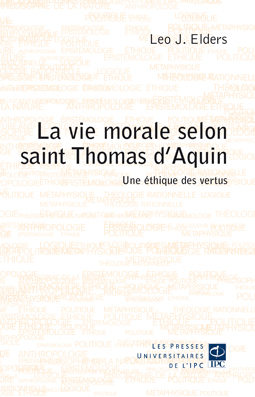
He has published a new book on Thomas Aquinas's ethics: La vie morale selon saint Thomas d'Aquin. Une éthique des vertus (Parole et Silence/Presses Universitaires de l’IPC, Paris, 2011, 336 p. ISBN 978-2-84573-974-1).
As part of a series of articles on Aquinas and the Fathers of the Church, in which he had already studied this topic in general and the influence of Jerome and John Chrysostom, Nova & Vetera (Fribourg) 2011/2 has published La présence de saint Grégoire le Grand dans les œuvres de saint Thomas d’Aquin.
While other publications on topics such as tolerance in Aquinas, Cajetan, the concept of conversion are being prepared, one looks forward with great expectation to his opus magnum: a historical and systematical study of all of Aquinas's commentaries on Aristotle. The chapters on the Posterior Analytics and the Peri Hermeneias are ready, substantial work on the Ethica, De Anima, Metaphysica and De Caelo has already been done.
donderdag, juni 09, 2011
60 uur aanbidding voor 60-jarig priesterjubileum van Paus Benedictus XVI
Het aartsbisdom Utrecht heeft een brief van kardinaal Piacenza, Prefect van de Congregatie voor de Clerus, verspreidt met een oproep tot 60 uur aanbidding ter gelegenheid van het 60-jarig priesterjubileum van Paus Benedictus XVI op 29 juni 2011! Het aartsbisdom heeft ook een mooi gebed verspreid.


dinsdag, mei 24, 2011
George Weigel en een pertinente vraag
George Weigel: Priests, Abuse, and the Meltdown of a Culture . The lessons of an important new study.
The John Jay study is less than illuminating on one point, and that is the relationship of all this to homosexuality. The report frankly states that “the majority of victims (81 percent) were male, in contrast to the distribution by victim gender in the United States [where] national incidence studies have consistently shown that in general girls are three times more likely to be abused than boys.” But then the report states that “the clinical data do not support the hypothesis that priests with a homosexual identity or those who committed same-sex sexual behavior with adults are significantly more likely to sexually abuse children than those with a heterosexual orientation or behavior.”
The disconnect, to the lay mind, seems obvious: Eighty-one percent of the victims of sexual abuse by priests are adolescent males, and yet this has nothing to do with homosexuality? Perhaps it doesn’t from the clinicians’ point of view (especially clinicians ideologically committed to the notion that there is nothing necessarily destructive about same-sex behaviors). But surely the attempt by some theologians to justify what is objectively immoral behavior had something to do with the disciplinary meltdown that the report notes from the late 1960s through the early 1980s; it might be remembered that it was precisely in this period that the Catholic Theological Society of America issued a study, Human Sexuality, that was in clear dissent from the Church’s settled teaching on fornication, self-abuse, and homosexual acts, and even found a relatively kind word to say about bestiality. And is there no connection to be found between the spike in abuse cases between the mid-1960s and the early 1980s, with its victimization of adolescent males, and the parallel spike in homoerotic culture in U.S. Catholic seminaries and religious orders in that same period? Given the prevailing shibboleths in the American academy (including the Catholic academy), it may be that no clinically or statistically demonstrable linkage will be found, but it strains credulity to suggest that there wasn’t a cultural connection here, one that bears serious reflection.
zondag, mei 15, 2011
Universae Ecclesiae en de bisschoppen
10. § 1. Naast de bevoegdheden eerder geschonken door Johannes Paulus II en bevestigd door Benedictus XVI (cf. Apostolische Brief Summorum Pontificum, art. 11 en art. 12), oefent de Pauselijke Commissie deze macht ook uit doordat zij, in de hoedanigheid van hiërarchisch Overste, beslissingen neemt inzake verzoeken, welke op rechtmatige wijze aan haar gericht zijn, tegen een afzonderlijke, administratieve maatregel van eender welke Ordinarius die in tegenspraak lijkt met de Apostolische Brief.
§ 2. De decreten waarmee de Pauselijke Commissie inzake deze verzoeken beslist kunnen ad normam iuris bij de Hoogste Rechtbank van de Apostolische Signatuur worden aangevochten.
Vertaling: a Belgian Thomist
Extra werk voor de Belgische aartsbisschop Frans Daneels O.Praem.?


zaterdag, mei 14, 2011
Universae Ecclesiae op de Seminaries
nr. 21 "Aan ordinarii wordt met aandrang gevraagd dat zij aan clerici de gelegenheid geven gevormd te worden om de gepaste kunst van het vieren in de buitengewone vorm te verwerven, hetwelk allereerst geldt voor de Seminaries, waar erin voorzien zal worden dat de studenten van het heilige op gepaste wijze gevormd worden, door middel van het leren van de Latijnse taal en, indien bijkomende omstandigheden dit vragen, de buitengewone vorm van de Romeinse Ritus zelf."
Vertaling: a Belgian Thomist
Abonneren op:
Posts (Atom)